
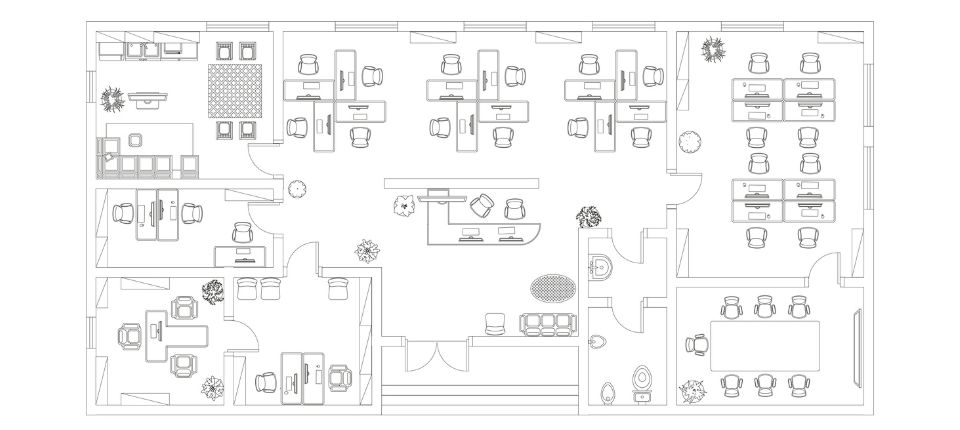
Commercial property and office space is one of the biggest costs for a business, so when it comes to leasing, over or under-estimating the amount of space needed can end up becoming expensive.
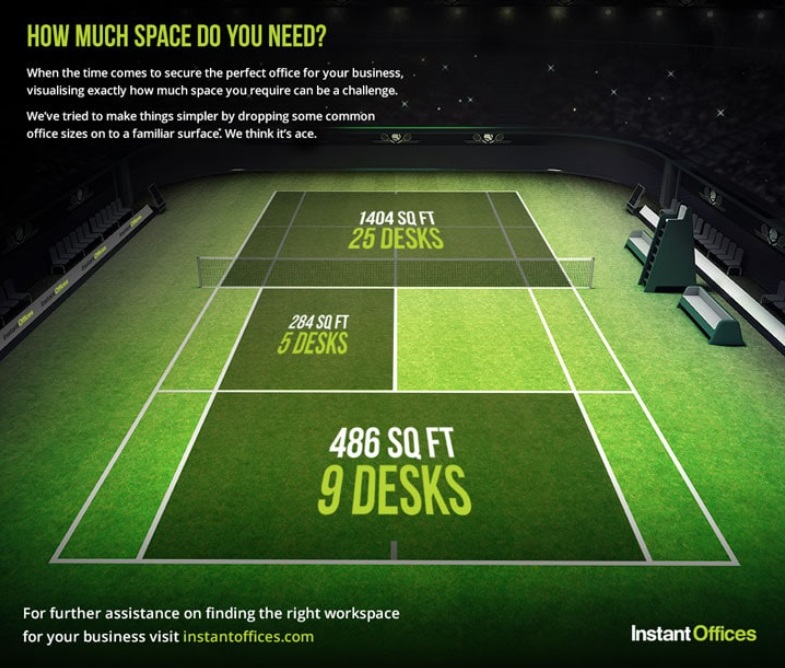
UK standards suggest an average of 11 cubic metres, or 5 square meters, as the minimum space required per person in an office, but this is just a guide. To accurately assess the amount of space a business needs to thrive, many variables need to be considered:
Amount and size of furniture or equipment
The type and size of furniture and equipment you use can significantly impact space requirements. For example, open-plan workstations with minimalist desks will need less space than private offices with large desks and storage units. Additionally, specialised equipment such as printers, copiers, and filing systems require dedicated space.
Ceiling height
Ceiling height can influence the perception of space and actual usability. Higher ceilings can make an office feel more spacious and airy. They also provide opportunities for additional storage solutions, such as overhead shelving.
Staff size and number of remote workers
The number of employees who will regularly occupy the office is an important factor. Additionally, consider the proportion of your workforce that works remotely. Some employees may only need occasional access to the office, and this can reduce the total space required.
Meeting room and break out space requirements
Meeting rooms and breakout spaces are important for collaboration, brainstorming, and employee well-being. The number and size of these spaces should align with your business needs.
Estimated company growth
When planning your office space consider potential company growth. Moving to a new office every time your staff size increases can be disruptive and costly. Instead, plan for scalability.
The layout of the space
The layout of the office space plays a crucial role in its functionality. An efficient layout maximises the available space and improves workflow. Considerations include the proximity of teams that need to collaborate, the placement of communal areas to avoid disruption and the ease of movement throughout the office.
Renting Too Much Space
Leasing too much space puts you at risk of paying for areas which could possibly sit empty. Office wastage refers to costs being paid unnecessarily on rent, business rates, service charges, utilities and more. Having lots of unused desks can also have an impact on employee motivation and their perception of the business. If you have clients in the office, too much empty space doesn’t necessarily create the right impression of a successful business!
Renting Too Little Space
Renting too little space can limit business growth and hinder staff expansion. Fitting out new space to accommodate new people or relocating prior to lease expiration can be costly.
So, what can you do to determine how much office space you need?
Asses Your Business Now and in the Future
The following questions will assist you in estimating how much space you need currently, as well as how much you will need according to the anticipated growth of your business.
- How many people do I employ?
- How many workstations does each person need?
- Which areas are shared, and which are private?
- Will I be hiring any more employees in the next two years?
- How long a lease am I committing to?
- How much is the business projected to grow in two years?
- Do teams work remotely and only require limited access to a shared workstation, or are teams required to be in the office at a dedicated workstation every day?
- What is our requirement for ancillary space – meeting rooms, telephone booths, collaboration space break-out areas etc?
In markets where occupational costs are higher, the expectation is that there would be more pressure on reducing floor area allocation per headcount. In markets where occupation costs are likely to be lower, the expectation is that the allocation of floor area per headcount is likely to be more generous.
Factors That Influence How Much Office Space You Need
- Type of work: The way you spend your workday plays a significant role in the amount of space required. Those who spend most of the day out on assignments or at meetings will be content in smaller areas, while those who require space for research, meetings or equipment for long periods spent at a workstation need larger areas.
- Employee happiness: Personal space is vital to employee wellbeing, and research points to the fact that workers are happier, more engaged and more alert in environments where they can sit, stand and walk around. Additionally, space can have an effect on the psychology of workers and can play an important role in general happiness.
- Company culture: The size of individual office space is often associated with hierarchy, but company culture has changed and these days, it’s not uncommon for everyone to sit in a shared space. The amount of office space needed will differ depending on your company culture and management structure.
- Other types of space requirements: Will you need a large formal conference room? Make sure the office space provider can provide one. Are informal meetings more your companies style? Are there on-site café facilities available? The more we work away from our desks, the more common spaces need to be taken into account.
Frequently Asked Questions
What is the difference between usable and rentable office space?
Usable office space is the actual area your business can use, including workspaces and private offices. Rentable office space includes usable space plus a share of common areas like lobbies and restrooms. Rent is usually based on rentable space, which is larger than usable space.
How can I ensure I have enough meeting and collaboration space?
Assess your team’s meeting needs by considering the number and types of meetings. Plan for various room sizes and types, such as large conference rooms, small huddle spaces, and informal collaboration areas. Ensure these spaces have the necessary technology and equipment.
How does remote work impact office space requirements?
Remote work reduces the need for permanent desks, allowing for more flexible and shared workspaces. Businesses can downsize their office space and incorporate hot-desking and collaboration areas to accommodate a hybrid work model.
What if my space needs change after I move in?
Flexible office spaces often allow for adjustments. You can typically expand or downsize your space with relative ease.
Why Are More Businesses Choosing Flexible Office Space?
Flexible offices, like coworking, managed or serviced offices, give you complete control over location, size and rental terms. Short-term leases available on a month-to-month basis give your business the ability to expand, reduce or move as needed, with everything you need to run a business included in a single monthly bill.
Are you confused by office rental terms or want to brush up on your office jargon? We’ve created a useful Glossary of Flexible Office Space terms, whether it’s hybrid, hotdesking or flexi working you’ll find all the explanations you need.
Looking for Office Space?
We Operate in Some of the World’s Top Cities:
London, New York, San Francisco, Paris, Singapore, Hong Kong,
Search more locations