
A recent HR report revealed that more employees leave their jobs at SMEs due to poor workplace culture. This has risen from 21% in 2020 to 27% (nearly one-third) in 2021.
More employees are speaking out about toxic or hostile workplace environments, and the act of ‘outing’ companies has become far more common. Brands like Brew Dog have found themselves doing damage control as past and present workers call them out on public platforms via open letters, employment review sites and social media posts.
Toxic workplace culture can cost your business serious money, raising turnover rates and damaging your reputation. Here’s how to prevent this problem by creating an inclusive, empowering workplace environment for all your employees.
What is Toxic Workplace Culture?
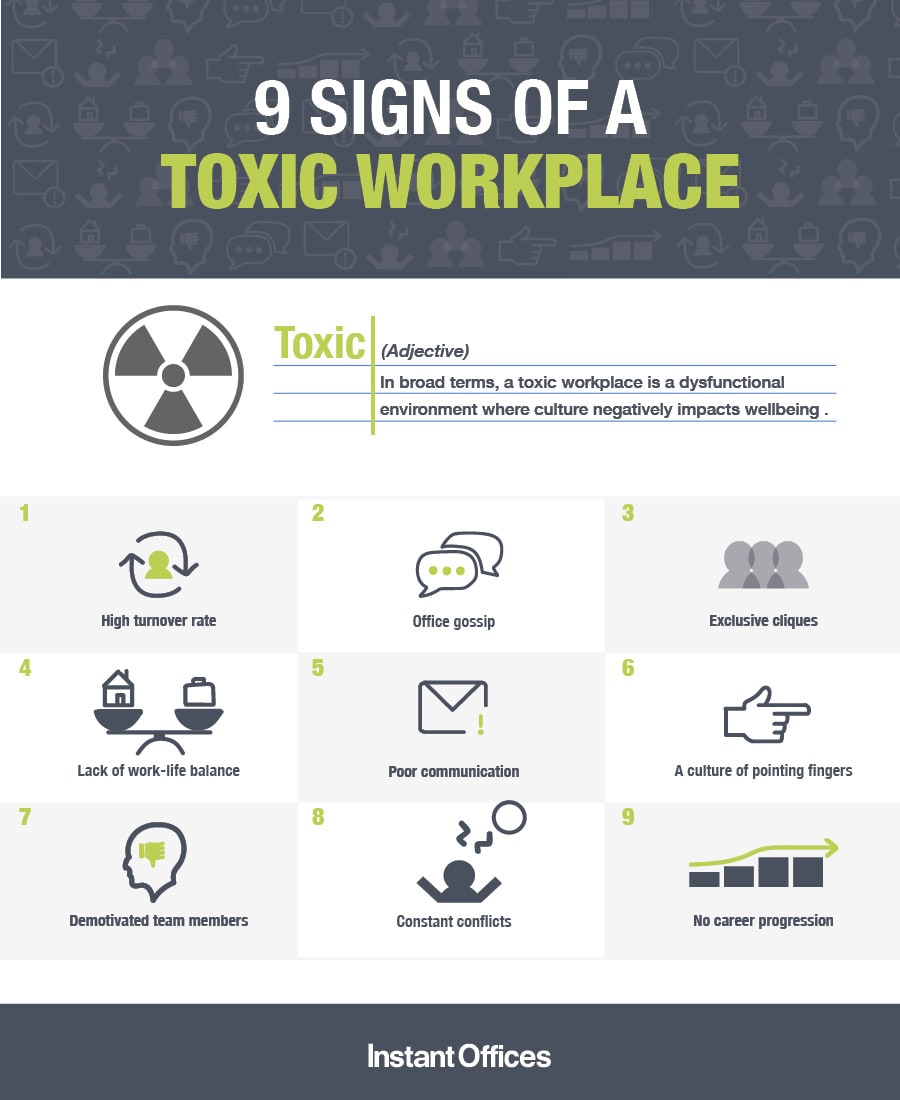
“Toxic” can mean different things to different people. In broad terms, a toxic workplace is a dysfunctional workplace.
The most obvious examples of this are bullying, harassment and discrimination in the office. However, a toxic work culture could also be one where employees work long unpaid hours to meet unreasonable deadlines, where they feel unappreciated or where they receive no support.
Poor company culture can also be caused by more subtle issues like a lack of communication.
Signs of a Toxic Workplace
Here are some tell-tale signs to watch out for in the workplace – these could be symptoms of a deeper problem with the company culture as a whole.
- Constant interpersonal conflicts
- Lack of teamwork and camaraderie
- Pointing fingers and blaming others when something goes wrong
- Poor problem-solving as a team
- Exclusive cliques or social groups
- Office gossip
- Work awarded based on personal connections rather than skill
- Poor communication and lack of clarity around projects
- Inconsistent communication and mixed messages
- Unhappy, demotivated workers
- High turnover rate
- Stifled/ stagnated career progression
- Lack of work-life balance
Can You Tell if a Company has a Toxicity Problem?
If you’re thinking of working for or partnering with a specific brand or company, it can be trickier to tell what type of workplace culture they have when you’re “outside looking in”. Do they really live up to the values you’ve heard about in their marketing? Or is it all smoke and mirrors? Here are some ways you can research a brand’s track record and get a feel for the type of culture they foster.
- Look at company reviews from present and past employees on reputable platforms like Glassdoor.
- Monitor their turnover rate over a period of several months and see how it compares to the industry average.
- Research how diverse the company is. Find out how many people in senior positions are women or from a BAME background.
- Pay attention to how they communicate with you and with each other.
Keeping Toxicity Out of your Company’s Culture
Even a small pocket of negativity or toxicity can spread far enough to “infect” an entire company. Once you spot a toxic trend, it’s important to address it as soon as possible so that it can be stopped.
- Lead by example – behave the way you want to see your employees behave. That includes maintaining a positive attitude and holding yourself accountable for mistakes.
- Treat every employee with dignity and respect, regardless of their position or seniority.
- Don’t play favourites, and don’t scapegoat or alienate any employee or group of employees.
- Make sure all management is properly trained on what makes a diverse and inclusive workplace.
- Ensure that all employees are properly trained on what constitutes bullying, harassment and discrimination in the workplace.
- Provide training that empowers managers to handle internal conflicts.
- Keep communication channels open for mutual feedback between employees and management.
- Encourage constructive feedback and create an environment where criticism can be shared without fear of “punishment”.
- Make sure your employees know that it’s safe to speak up.
- Recognise and reward your employees’ efforts.
- Promote employees based on skill, not just on likeability.
- Foster an environment of open, constructive communication.
“Toxicity thrives in a culture of silence. Giving your employees a voice helps to create a workplace culture that is open, inclusive and healthy.”
-Lucinda Pullinger, Managing Director for the UK – The Instant Group
Looking for Office Space?
We Operate in Some of the World’s Top Cities:
London, New York, San Francisco, Paris, Singapore, Hong Kong,
Search more locations